Mike Myers’ Live-Action “The Cat in the Hat”
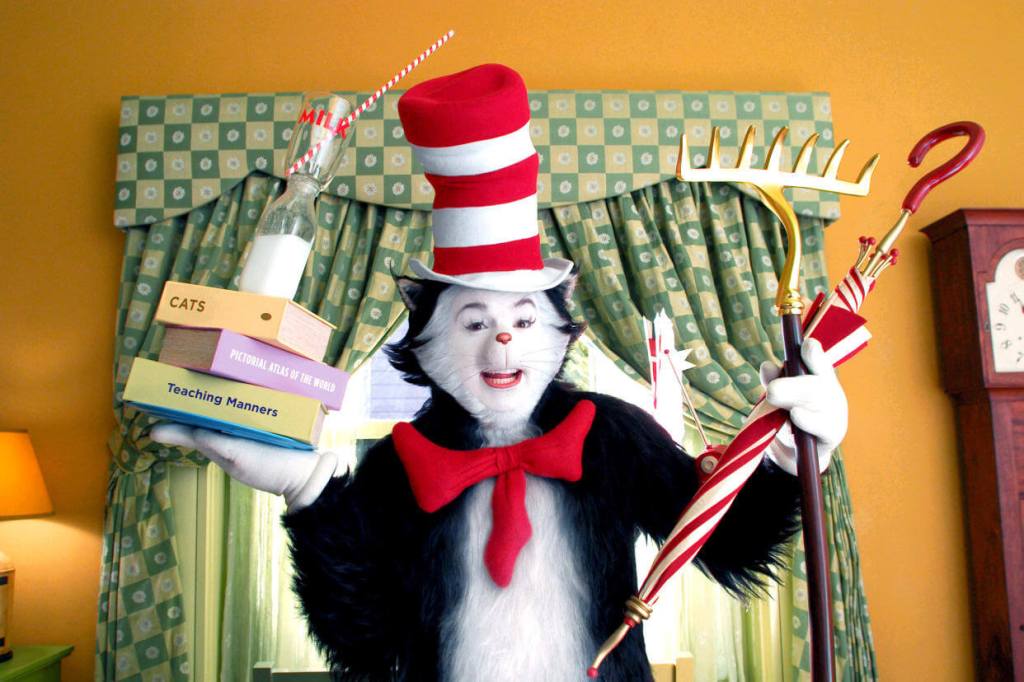
Released in 2003, the live-action film “The Cat in the Hat” features Mike Myers as the mischievous and whimsical Cat. Directed by Bo Welch, this adaptation takes a more modern and comedic approach to Dr. Seuss’s beloved children’s book. The film brings the colorful and quirky world of Seuss to life with vibrant sets, elaborate costumes, and a mix of practical effects and CGI.
Key Features:
- Mike Myers’ Performance: Myers brings his signature comedic style to the role, infusing the Cat with a blend of mischief, charm, and eccentricity. His portrayal adds a unique twist to the character, making it memorable and distinct.
distinct.
Visuals and Special Effects: The film’s elaborate production design and special effects create a visually stunning and immersive experience. The bright and whimsical sets capture the essence of Dr. Seuss’s illustrations while adding a modern touch.
Comedy and Humor: The live-action adaptation leans heavily into slapstick humor and jokes that cater to both children and adults. The film includes several comedic sequences that were not present in the original book.
The Animated “The Cat in the Hat”
The cat in the hat knows a lot about that

The animated version of “The Cat in the Hat” has had several adaptations, with one of the most notable being the 1971 television special produced by DePatie-Freleng Enterprises. This adaptation stays closer to Dr. Seuss’s original book in terms of narrative and visual style.
Key Features:
- Faithful Adaptation: The animated version closely follows the plot and structure of Dr. Seuss’s book. The story revolves around the Cat’s visit to the home of Sally and her brother, where chaos ensues as the Cat introduces them to a world of fun and mischief.
- Visual Style: The animation retains the iconic look of Dr. Seuss’s illustrations, with simple yet expressive character designs and vibrant colors. The animation style captures the whimsical and fantastical elements of the story
- Narration and Voice Acting: The animated version features voice acting that brings the characters to life while staying true to the tone of the original book. The narration often includes direct quotes from the book, maintaining the literary charm.
Comparison
Tone and Style:
- The live-action film with Mike Myers adopts a more comedic and modern tone, appealing to a broad audience with its humor and special effects.
- The animated version stays true to the whimsical and imaginative tone of Dr. Seuss’s book, preserving the essence of the original story.
Visuals:
- The live-action film features elaborate sets, costumes, and special effects, creating a visually rich experience.
- The animated version uses simple yet expressive animation that closely resembles Dr. Seuss’s illustrations.
Narrative and Characters:
- The live-action film introduces new comedic elements and sequences that expand on the original story.
- The animated version remains faithful to the book’s plot and structure, with minimal deviations from the source material.
Audience Reception:
- The live-action film received mixed reviews, with some praising the creativity and performances, while others felt it strayed too far from the original book.
- The animated version is generally well-received for its faithful adaptation and nostalgic appeal.
Both versions of “The Cat in the Hat” offer unique takes on Dr. Seuss’s classic tale. While the live-action film with Mike Myers adds a modern comedic twist, the animated version remains a beloved and faithful adaptation of the original story. Ultimately, each version has its own charm and appeal, catering to different tastes and preferences.
 Caturday Nights